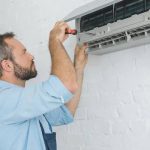

Air conditioners are essential for maintaining comfort in homes and workplaces, especially during hot weather. Over time, these systems can lose efficiency due to various issues that affect their performance. Repairing an air conditioner promptly not only restores its cooling capacity but also helps reduce energy consumption and prolongs the unit’s lifespan. Several common repair cases illustrate how addressing specific problems can significantly improve air conditioner efficiency.
One frequent cause of reduced AC efficiency is a clogged or dirty air filter. Filters trap dust, pollen, and other particles, preventing them from entering the system. When filters become blocked, airflow decreases, forcing the unit to work harder to cool a space. Cleaning or replacing these filters often leads to immediate improvements in cooling performance and lowers electricity bills by easing the system’s workload.
Another typical issue involves refrigerant leaks. Refrigerant is crucial for absorbing heat from indoor air; when levels drop due to leaks, cooling effectiveness diminishes noticeably. Technicians locate and seal leaks before recharging the refrigerant to optimal levels. This repair restores proper pressure within the system and allows it to operate as designed, resulting in cooler indoor temperatures without excessive energy use.
Faulty compressors also contribute significantly to AC inefficiency. The compressor circulates see here refrigerant through coils inside the unit; if it malfunctions or fails completely, cooling stops altogether or becomes inconsistent. Replacing or repairing compressors requires professional expertise but yields substantial gains in restoring full functionality and improving overall system reliability.
Electrical component failures such as worn capacitors or damaged wiring frequently cause intermittent operation or complete shutdowns of air conditioners. These parts control motor functions within fans and compressors; when they degrade over time, motors may run inefficiently or fail prematurely. Diagnosing electrical faults early prevents further damage while ensuring smooth operation after repairs.
Drainage problems related to blocked condensate lines also impact AC efficiency by causing water buildup inside units instead of being properly expelled outside. Standing water encourages mold growth that clogs components further while reducing airflow through evaporator coils-a critical step for heat exchange during cooling cycles. Clearing drainage pathways eliminates moisture accumulation issues that hinder performance.
In many cases where multiple minor defects coexist-such as dirty coils combined with low refrigerant-the cumulative effect severely reduces an air conditioner’s ability to cool effectively even though each individual problem might seem manageable alone. Comprehensive inspections followed by targeted repairs restore balanced functioning across all parts involved in temperature regulation.
Timely maintenance coupled with expert repairs ensures that air conditioning units operate at peak efficiency throughout their service life rather than gradually deteriorating into costly replacements sooner than necessary.