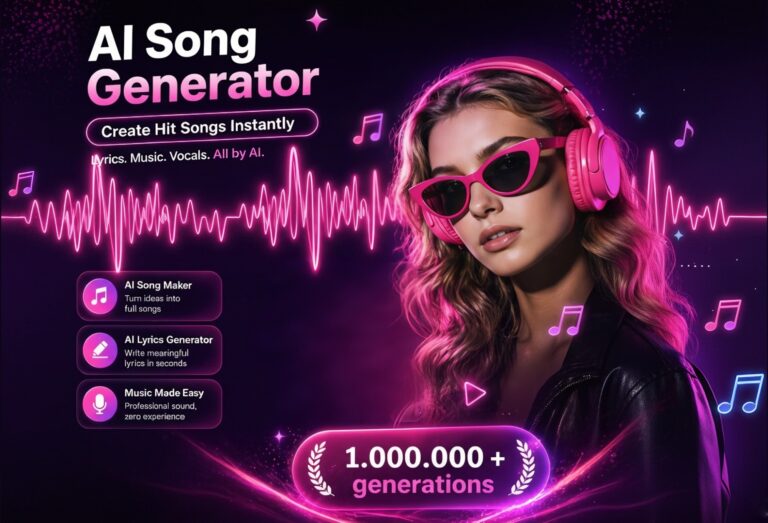

In recent years, the music industry has witnessed a significant transformation driven by advancements in artificial intelligence (AI). Among these innovations, AI song generator technology has emerged as a powerful tool that is capturing the attention of musicians worldwide. The reasons behind this growing interest are multifaceted, reflecting both creative and practical considerations.
One of the primary motivations for musicians to explore AI song generators is the enhancement of creativity. Songwriting can be an arduous process filled with moments of writer’s block and creative stagnation. AI-powered tools offer fresh perspectives by generating melodies, harmonies, or lyrics based on vast datasets drawn from diverse musical genres. This capability allows artists to break through creative barriers and experiment with new sounds they might not have conceived independently. By collaborating with AI, musicians can push their artistic boundaries and discover innovative musical ideas that enrich their compositions.
Moreover, AI song generators provide efficiency in music production. Traditional songwriting often involves lengthy trial-and-error sessions to refine melodies or lyrics until they resonate emotionally with listeners. With AI assistance, artists can quickly generate multiple variations of a tune or lyrical theme within minutes rather than days or weeks. This speed enables musicians to focus more on refining their unique style and emotional expression instead of getting bogged down by technical details or repetitive tasks.
Another compelling reason for embracing AI technology is accessibility. Aspiring musicians who may lack formal training in music theory or composition find these tools particularly valuable because they lower entry barriers into songwriting. By leveraging intuitive interfaces powered by sophisticated algorithms, beginners can produce high-quality demos that capture their vision without needing extensive expertise. This democratization fosters diversity within the music landscape as more voices gain opportunities to create and share original works.
Furthermore, collaboration between humans and machines opens up exciting possibilities for genre fusion and cultural exchange. Since many AI models are trained on global datasets encompassing various musical traditions, they can blend elements from different styles seamlessly-whether combining classical motifs with electronic beats or integrating folk rhythms into pop structures-resulting in novel hybrid sounds that appeal to broader audiences.
Despite some skepticism about authenticity when using machine-generated content, many professionals view AI as a complementary partner rather than a replacement for human creativity. The emotional depth conveyed by musicians remains central; AI serves primarily as an enhancer that provides raw material upon which artists imprint personal meaning and nuance.
In conclusion, musicians are increasingly exploring AI song generator technology because it stimulates creativity, accelerates production processes, enhances accessibility for newcomers, and fosters innovative cross-genre experimentation. As this technology continues evolving rapidly alongside human ingenuity, it promises to reshape how music is composed while preserving the deeply human essence at its core.