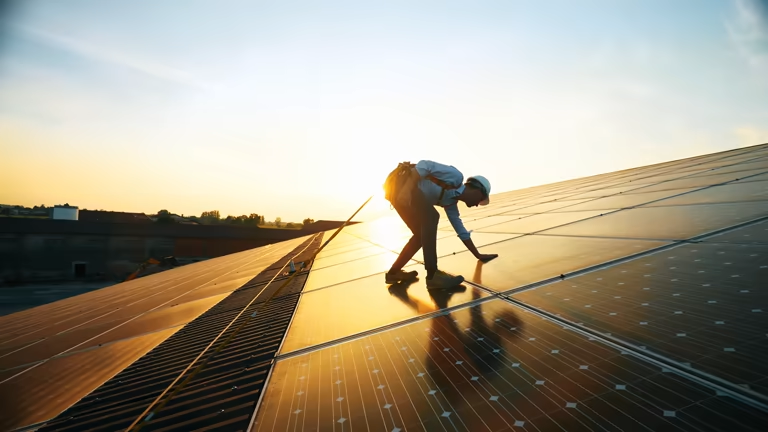

As the world shifts toward renewable energy, one technology stands at the forefront: photovoltaic panels. These sleek structures harness sunlight and convert it into electricity, making them a vital player in our quest for sustainable living. But how efficient are these panouri fotovoltaice today? With advancements happening rapidly, it’s essential to understand their capabilities and benefits. Join us as we explore the fundamentals of PV panels, the cutting-edge innovations shaping their efficiency, and why embracing solar energy is crucial for our planet’s future.
Basics of Photovoltaic (PV) Panels
Photovoltaic panels, commonly known as solar panels, are devices that convert sunlight directly into electricity. They consist of numerous solar cells made primarily from silicon. When sunlight hits these cells, it excites electrons, creating an electric current.
There are two main types of photovoltaic technology: monocrystalline and polycrystalline. Monocrystalline panels boast higher efficiency rates due to their single-crystal structure. Meanwhile, polycrystalline options are often more affordable but slightly less efficient.
These panels can be installed on rooftops or in large solar farms. Their versatility makes them suitable for various applications, from powering homes to supplying energy for entire communities.
One significant benefit of PV panels is their ability to generate clean energy without harmful emissions. As they harness the sun’s power, they contribute positively to our environment and reduce reliance on fossil fuels.
Technological Advances in PV Panels
Recent advancements in photovoltaic (PV) technology have transformed the solar energy landscape. Innovations such as bifacial panels are gaining traction, capturing sunlight from both sides. This dual absorption ability increases efficiency by up to 30%.
Another exciting development is the introduction of perovskite solar cells. These materials promise higher efficiency rates at a lower production cost compared to traditional silicon-based panels.
Smart technology integration is also reshaping how we utilize solar power. With built-in sensors and IoT capabilities, modern PV systems can optimize energy output according to real-time data.
Moreover, flexible and lightweight designs open new possibilities for installation locations previously deemed impractical. The future looks bright with these technological strides enhancing not just performance but accessibility in renewable energy solutions.
The Importance of Solar Energy
As the world grapples with the urgent need for sustainable energy sources, solar power has emerged as a front-runner. The efficiency of panouri fotovoltaice plays a crucial role in harnessing this abundant resource. These panels convert sunlight into electricity, reducing our reliance on fossil fuels and decreasing greenhouse gas emissions.
Adopting solar energy not only benefits individual households but also contributes to national energy goals. By integrating more renewable resources like photovoltaic systems into our grids, we can create a cleaner environment and enhance energy security. Moreover, with advancements in technology making these panels more efficient and affordable, now is an ideal time for homeowners and businesses to invest in solar solutions.